
Spray Tanning vs. UV Tanning: Which Is Safer?
By Boca Spray Tanning Club Editorial Team · Published 2026-09-11
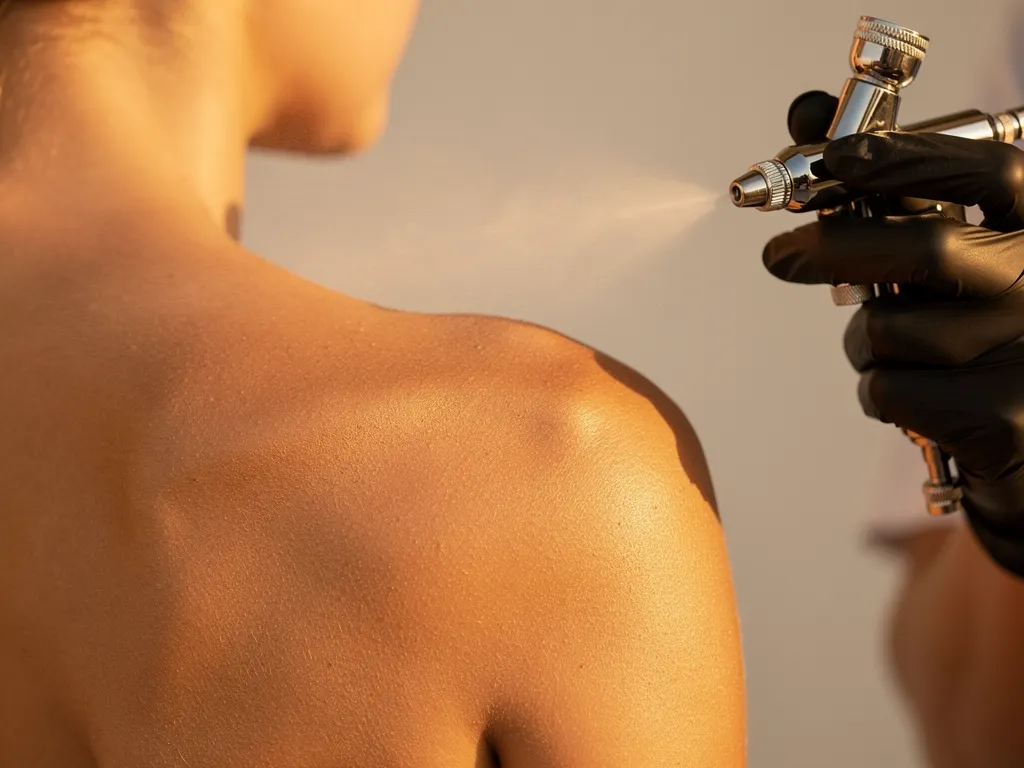
You shouldn’t have to choose between beautifully bronzed skin and protecting the health of your skin. Sunbathing and tanning beds darken skin by exposing it to ultraviolet radiation. A professional spray tan creates the same warm color without exposing your skin to damaging UVA or UVB rays — a safer cosmetic alternative for anyone who wants a natural-looking glow without deliberately subjecting their skin to UV exposure.
The American Cancer Society reports that spray tanning does not expose the skin to UV rays and is not known to increase the risk of skin cancer. The American Academy of Dermatology also recognizes self-tanning as a way to achieve bronzed color without the premature aging and skin-cancer risks associated with UV tanning.
Spray Tanning Compared With Sun and Tanning Beds
| Professional spray tanning | Sunbathing and tanning beds |
|---|---|
| Creates color without UVA or UVB exposure | Requires exposure to ultraviolet radiation |
| Is not known to increase skin-cancer risk when properly applied | UV exposure damages skin cells and increases skin-cancer risk |
| Does not require the skin damage that produces a UV tan | A UV tan is a visible response to skin injury |
| Does not cause a sunburn | Can produce painful burns and lasting skin damage |
| Avoids UV-related wrinkles and premature skin aging | Accelerates wrinkles, age spots, sagging and loss of firmness |
| Can be customized to your complexion and desired depth | Color depends on UV exposure and your skin’s reaction |
| Delivers visible color without hours in the sun or repeated tanning-bed sessions | Often requires repeated exposure to build and maintain color |
| Can be professionally and evenly applied | May develop unevenly and encourage additional exposure |
The Benefits of Choosing Sunless Color
Beautiful color without increased UV exposure
Ultraviolet radiation from the sun and indoor tanning equipment can damage the DNA inside skin cells. According to the American Academy of Dermatology, every UV tan or sunburn represents additional skin damage, and as that damage accumulates, the risk of skin cancer increases. Professional spray tanning takes a different approach: DHA reacts with proteins on the outer surface of the skin to temporarily create bronzed color, with no ultraviolet radiation required to produce the result.
Protect the youthful appearance of your skin
The American Academy of Dermatology reports that repeated UV tanning can accelerate visible changes in the appearance and texture of the skin:
- Fine lines and wrinkles
- Age spots and uneven pigmentation
- Loss of skin firmness
- A dry or leathery texture
A safer alternative to indoor tanning
Tanning beds are not a safer version of sunlight. They expose the skin to concentrated ultraviolet radiation, and major medical organizations advise against their use. The American Academy of Dermatology reports that indoor tanning can more than double the risk of developing melanoma and is associated with increased risks of basal cell and squamous cell carcinoma. The Skin Cancer Foundation recommends choosing sunless products or professional spray tans instead.
No sunburn required
A natural suntan may appear healthy, but dermatologists explain that tanning is the skin’s response to UV injury — even a so-called base tan does not prevent sunburn or make additional UV exposure safe. Spray tanning creates the appearance of a tan without requiring redness, burning or hours of unprotected sun exposure, especially valuable beneath the strong South Florida sun.
Customized color instead of unpredictable exposure
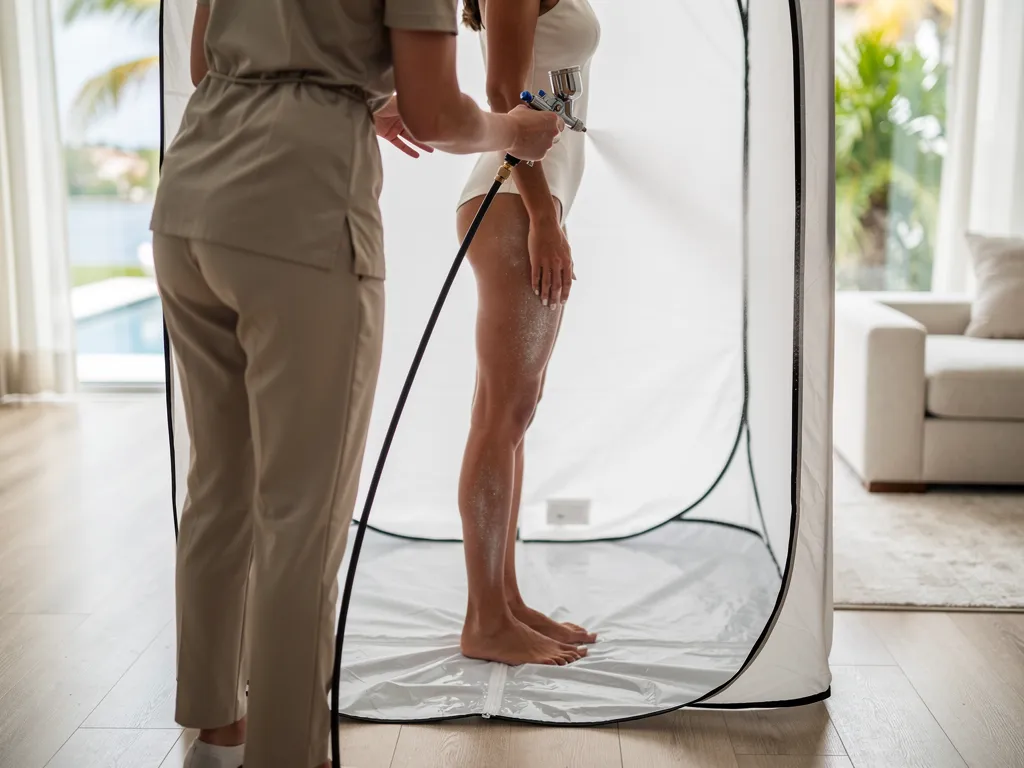
Sunbathing can be unpredictable. Cloud cover, time of day, sunscreen application, medications and differences in skin sensitivity can all affect how the skin responds, and the result may be uneven color, tan lines or a painful burn. A professional appointment provides more control: your Signature Mobile Tan solution is selected according to your natural complexion, skin type and preferred depth of color.
Why Choose a Professional Spray Tan?
Sunless tanning products are widely available, but professional application provides a more refined and personalized experience. The result isn’t simply darker skin — it’s customized color designed to look natural, polished and appropriate for you.
- Color selected for your complexion
- Consistent full-body coverage
- Careful blending around hands and feet
- Fewer streaks and missed areas
- Personalized rinse-time instructions
- Private, professional application
- Guidance for longer-lasting results
- Home, hotel or private-venue service
What Trusted Health Authorities Say
American Cancer Society
Properly used DHA products have fewer risks than tanning with sunlight or tanning beds. Spray tanning is not known to increase skin-cancer risk because it does not expose skin to UV rays.
American Academy of Dermatology
Self-tanning offers bronzed color without increasing the UV-related risks of premature wrinkles, leathery skin and skin cancer.
Skin Cancer Foundation
Professional spray tans and other sunless products are alternatives for people seeking a bronzed appearance while avoiding UV tanning.
U.S. FDA
DHA can create a tanned appearance without sunlight or artificial UV radiation and is permitted for external application to the skin.
Glow Now. Protect Your Skin for Later.
Professional spray tanning offers what sunbathing and UV tanning beds cannot: personalized, natural-looking color without deliberately exposing your skin to ultraviolet radiation. We bring this elevated experience directly to your home, hotel or private venue in Boca Raton and Delray Beach — every appointment is designed around your complexion, your schedule and the depth of color you want. Call us at +1 (561) 502-6571 or book online below.
Medical and Scientific Sources
- American Cancer Society: Is It Safe to Get a Fake or Sunless Tan?
- American Academy of Dermatology: Facts About Indoor Tanning
- Skin Cancer Foundation: Sunless Tanning Explained
- Skin Cancer Foundation: Spray, Don’t Bake
- U.S. FDA: Sunless Tanners and Bronzers
- CDC: Preventing Skin Cancer Through Reduction of Indoor Tanning
Important sun-safety information: A spray tan does not provide sun protection. Continue using broad-spectrum sunscreen, protective clothing and other appropriate sun-protection measures outdoors. DHA is intended for external application; during spray application, appropriate measures should be used to prevent inhalation, ingestion and contact with the eyes, lips and other mucous membranes.